
 EN
EN
Wat Chakrawat Rachawat Woramahawihan
Wat Sam Pluem, an ancient temple filled with meaningful architecture and the legend of Ai Bot Wat Sam Pluem
Go Walk


1608 CAFE & BISTRO


ClosedHours 06:00 - 19:00Daily
ห้องน้ำ EN
วีลแชร์เข้าได้ EN
จอดรถได้ EN
งดใช้เสียง EN
Details
Wat Sam Pluem, an ancient temple filled with meaningful architecture and the legend of Ai Bot Wat Sam Pluem
Read More About Wat Chakrawat Rachawat Woramahawihan
Wat Chakrawat was originally named Wat Nang Pluem or Wat Sam Pluem, a people's temple built since the Ayutthaya period during King Rama I's reign. The Royal Chronicles mention a fire incident at Wat Chakrawat:
"...1800, Monday, second lunar month, 8th waxing day, 5 pm, a fire occurred at Wat Sam Pluem extending down to Talat Noi Wat Sampheng..."
Evidence of Wat Sam Pluem's renovation appears in late King Rama I to early King Rama II period, initiated by Chao Phraya Aphai Racha (Pin), but he passed away before completion. Later in 1819, Chao Phraya Bodindecha (Singh Singhaseni) renovated the entire temple, building the ordination hall, monks' quarters, and sermon hall, as well as digging a canal from the Chao Phraya River to the temple's water pond. He invited monks from Wat Phra Chetuphon and Wat Ratchaburana to observe the rains retreat. Later in 1825, King Rama III accepted it as a royal temple and bestowed the name "Wat Chakrawat Rachawat."
"...1800, Monday, second lunar month, 8th waxing day, 5 pm, a fire occurred at Wat Sam Pluem extending down to Talat Noi Wat Sampheng..."
Evidence of Wat Sam Pluem's renovation appears in late King Rama I to early King Rama II period, initiated by Chao Phraya Aphai Racha (Pin), but he passed away before completion. Later in 1819, Chao Phraya Bodindecha (Singh Singhaseni) renovated the entire temple, building the ordination hall, monks' quarters, and sermon hall, as well as digging a canal from the Chao Phraya River to the temple's water pond. He invited monks from Wat Phra Chetuphon and Wat Ratchaburana to observe the rains retreat. Later in 1825, King Rama III accepted it as a royal temple and bestowed the name "Wat Chakrawat Rachawat."
Points of Interest in Wat Chakrawat Rachawat Woramahawihan
Important ancient buildings within Wat Chakrawat include:
The Ordination Hall was rebuilt during King Rama III's reign by Chao Phraya Ratchasupawadi (later Chao Phraya Bodindecha) because when King Rama III came to present Kathina robes at this temple, he observed that the ordination hall (original building) was shorter than the Phra Bang vihara. Chao Phraya Ratchasupawadi therefore built a new ordination hall as replacement. The architectural style of the ordination hall follows King Rama III's royal preference, with distinctive features: brick and plaster gables without cho fa, bai raka, and hang hong, decorated with blue-patterned tiles depicting angels paying homage surrounded by spiral patterns. The lower part of the gable features turtle, ox, lion, naga, and rooster figures - animals appearing in the legend of the 5 Buddhas in Bhadrakalpa. Inside the ordination hall are murals depicting Jataka tales and celestial assembly.
The Vihara was originally the old ordination hall. When a new ordination hall was built, it became the vihara, called the middle vihara. The architecture is traditional style with beautifully carved wooden gables depicting angels paying homage surrounded by spiral patterns, a style popular since late Ayutthaya period. The front of the vihara has a projecting porch with gables decorated with plaster molding in the shape of ceremonial fans surrounded by karanok patterns.
Inside the vihara are traditional-style murals. Behind the principal Buddha image depicts Traiphum cosmology. The wall in front of the principal Buddha depicts Mara's assault. Walls between windows depict the Buddha's life story. The upper section depicts past Buddhas flanked by disciples. However, all murals inside the vihara have been restored.
Vihara Phra Nak is a small vihara, originally enshrining "Phra Bang," a Buddha image that Chao Phraya Bodindecha brought from Vientiane during the campaign against Chao Anouvong in 1827. Later in 1866, King Rama IV returned Phra Bang to be enshrined in Luang Prabang and commanded that "Phra Nak" from the throne hall in the Grand Palace be enshrined as replacement.
Vihara Phra Nak has interesting artwork: gables decorated with plaster patterns and blue tiles depicting stories from the legend of the 5 Buddhas in Bhadrakalpa, consistent with decorations on the new ordination hall gables, likely created during the same period.
Phra Buddha Prang was built around 1827 after Chao Phraya Bodindecha returned from the Vientiane campaign. It is considered the tallest prang-style chedi on the Phra Nakhon side.
Shrine of Chao Phraya Bodindecha enshrines a statue of Chao Phraya Bodindecha, modeled from a painted statue created by Nak Ong Duang (Somdet Phra Hariraksramathipdi), King of Cambodia, at Oudong City. The original shrine was built in 1942. Later in 1996, the temple renovated the shrine and moved it to beside the crocodile pond as seen today.
Mondop Phra Phutthabat was originally a Tripitaka hall built in a pond near the old ordination hall. During Phra Phothiwong Ajarya (Seng), the 6th abbot's time, it was converted to a vihara because the original Tripitaka hall was deteriorated. The pond is the current crocodile pond. Additionally, a Pa Le Lai-style Buddha image was enshrined inside the newly built vihara. Later during Phra Phutta Ajarya (Ma), the 7th abbot's time, renovation created a mondop enshrining the Pa Le Lai Buddha along with building a replica Buddha footprint. Later, the Buddha footprint veneration ceremony at Wat Chakrawat was established, held in mid-third lunar month.
During Phra Mongkhon Thippayamuni (Pandito Mui)'s time, a new mondop Phra Phutthabat was built in chatutmukhayot prang (four-faced prang top) style, and a model mountain was later built at this mondop area.
The Ordination Hall was rebuilt during King Rama III's reign by Chao Phraya Ratchasupawadi (later Chao Phraya Bodindecha) because when King Rama III came to present Kathina robes at this temple, he observed that the ordination hall (original building) was shorter than the Phra Bang vihara. Chao Phraya Ratchasupawadi therefore built a new ordination hall as replacement. The architectural style of the ordination hall follows King Rama III's royal preference, with distinctive features: brick and plaster gables without cho fa, bai raka, and hang hong, decorated with blue-patterned tiles depicting angels paying homage surrounded by spiral patterns. The lower part of the gable features turtle, ox, lion, naga, and rooster figures - animals appearing in the legend of the 5 Buddhas in Bhadrakalpa. Inside the ordination hall are murals depicting Jataka tales and celestial assembly.
The Vihara was originally the old ordination hall. When a new ordination hall was built, it became the vihara, called the middle vihara. The architecture is traditional style with beautifully carved wooden gables depicting angels paying homage surrounded by spiral patterns, a style popular since late Ayutthaya period. The front of the vihara has a projecting porch with gables decorated with plaster molding in the shape of ceremonial fans surrounded by karanok patterns.
Inside the vihara are traditional-style murals. Behind the principal Buddha image depicts Traiphum cosmology. The wall in front of the principal Buddha depicts Mara's assault. Walls between windows depict the Buddha's life story. The upper section depicts past Buddhas flanked by disciples. However, all murals inside the vihara have been restored.
Vihara Phra Nak is a small vihara, originally enshrining "Phra Bang," a Buddha image that Chao Phraya Bodindecha brought from Vientiane during the campaign against Chao Anouvong in 1827. Later in 1866, King Rama IV returned Phra Bang to be enshrined in Luang Prabang and commanded that "Phra Nak" from the throne hall in the Grand Palace be enshrined as replacement.
Vihara Phra Nak has interesting artwork: gables decorated with plaster patterns and blue tiles depicting stories from the legend of the 5 Buddhas in Bhadrakalpa, consistent with decorations on the new ordination hall gables, likely created during the same period.
Phra Buddha Prang was built around 1827 after Chao Phraya Bodindecha returned from the Vientiane campaign. It is considered the tallest prang-style chedi on the Phra Nakhon side.
Shrine of Chao Phraya Bodindecha enshrines a statue of Chao Phraya Bodindecha, modeled from a painted statue created by Nak Ong Duang (Somdet Phra Hariraksramathipdi), King of Cambodia, at Oudong City. The original shrine was built in 1942. Later in 1996, the temple renovated the shrine and moved it to beside the crocodile pond as seen today.
Mondop Phra Phutthabat was originally a Tripitaka hall built in a pond near the old ordination hall. During Phra Phothiwong Ajarya (Seng), the 6th abbot's time, it was converted to a vihara because the original Tripitaka hall was deteriorated. The pond is the current crocodile pond. Additionally, a Pa Le Lai-style Buddha image was enshrined inside the newly built vihara. Later during Phra Phutta Ajarya (Ma), the 7th abbot's time, renovation created a mondop enshrining the Pa Le Lai Buddha along with building a replica Buddha footprint. Later, the Buddha footprint veneration ceremony at Wat Chakrawat was established, held in mid-third lunar month.
During Phra Mongkhon Thippayamuni (Pandito Mui)'s time, a new mondop Phra Phutthabat was built in chatutmukhayot prang (four-faced prang top) style, and a model mountain was later built at this mondop area.
Have You Found the Buddha Shadow Image at the Mountain Near the Ordination Hall?
The Buddha Shadow Mountain is located near the ordination hall, built during Phra Phutta Ajarya (Ma), the 7th abbot's time. The mirror used as the surface for painting the Buddha image was a large dressing mirror belonging to Chao Phraya Yommarat (Kaew), son of Chao Phraya Bodindecha. Phraya Phetra (Dit), his son, offered it to Phra Phutta Ajarya to use for painting the Buddha Shadow image.
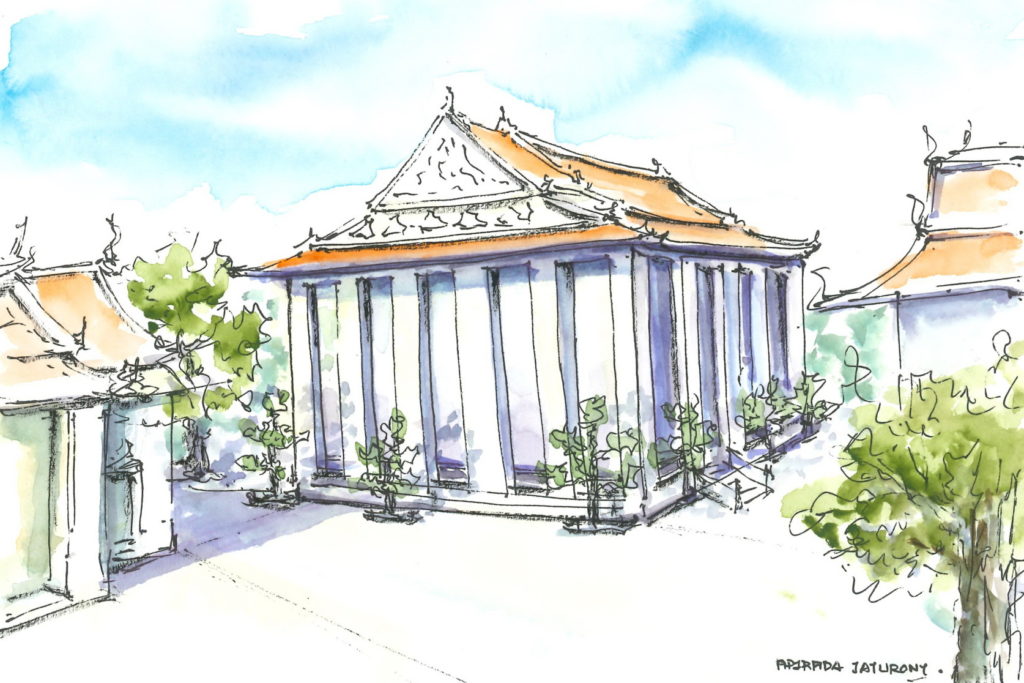
Wat Chakrawat Rachawat Woramahawihan
วัดจักรวรรดิราชาวาสวรมหาวิหาร (วัดสามปลื้ม) ถนน จักรวรรดิ Chakkrawat, Samphanthawong, Bangkok, Thailand
Loading map...
Related Events
- 20Oct
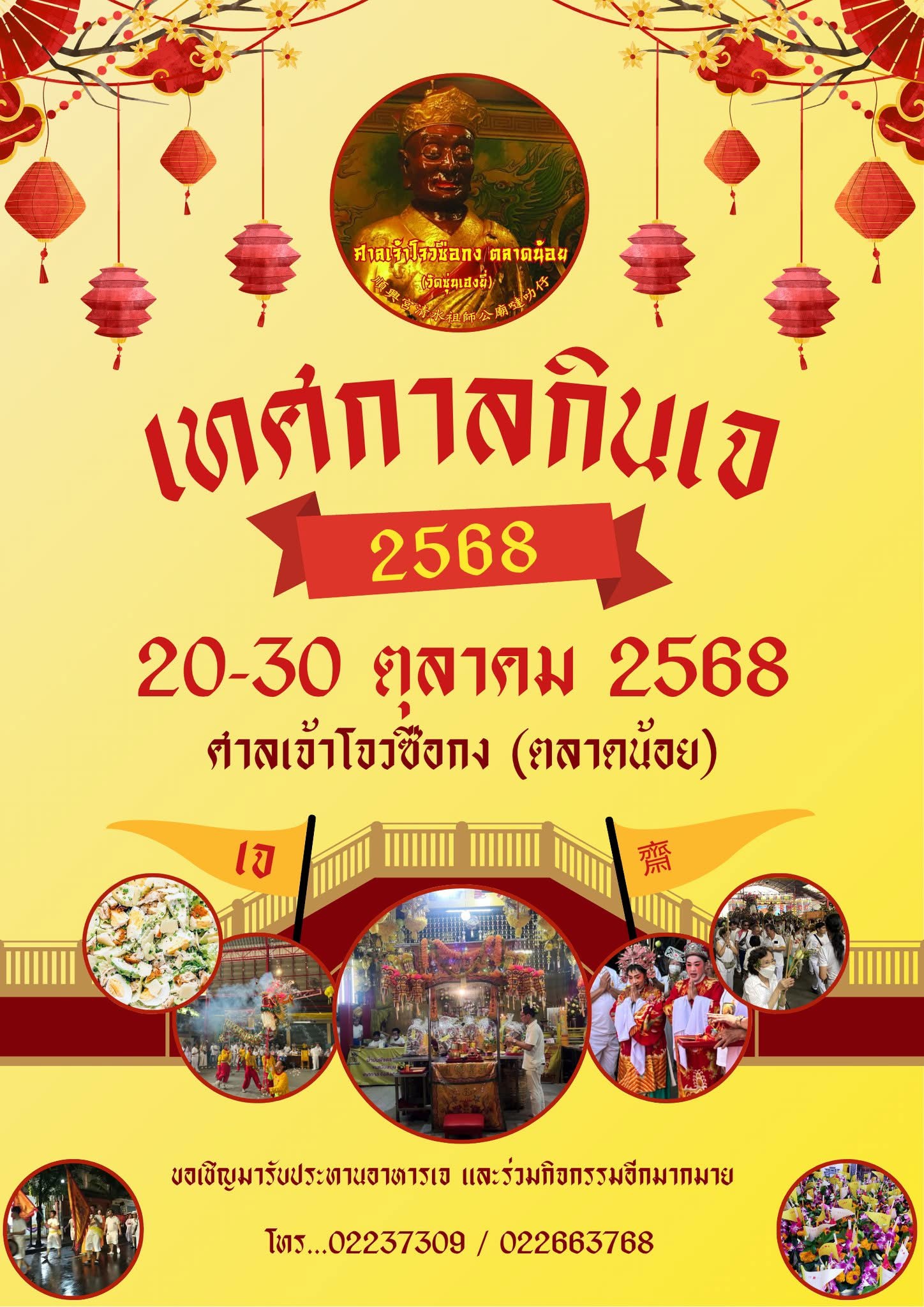 20-30 October 2025Vegetarian Festival 2025 at Zhou Si Gong ShrineContent translation neededSamphanthawongZhou Si Gong Shrine (Talad Noi)
 - 6Oct
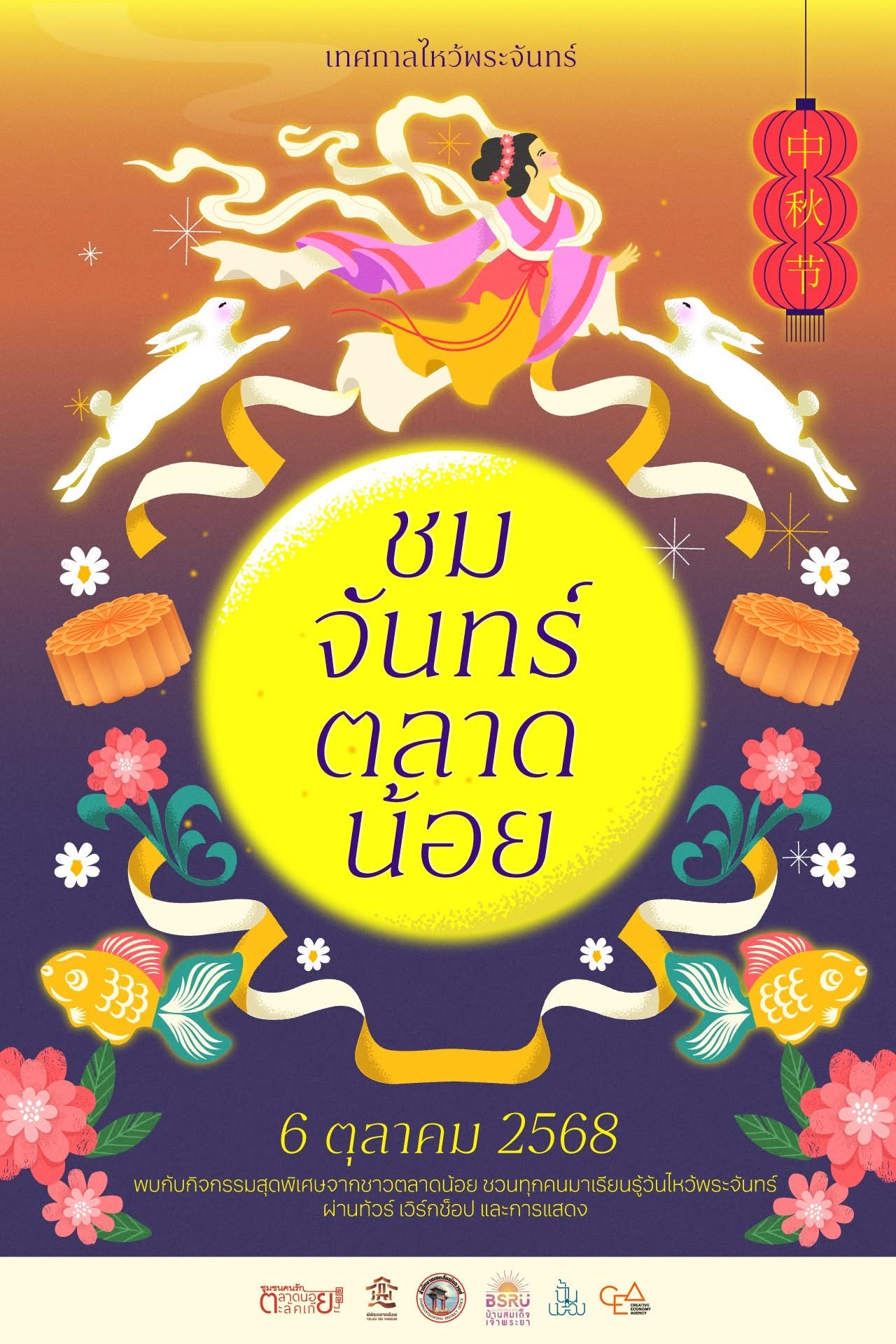 6 October 2025Moon Viewing Festival Talad Noi: Mid-Autumn FestivalContent translation neededSamphanthawongBhanurangsi Pier, Talad Noi Museum
 - 4Oct
 4-5 October 2025Talakkia Friendly Market #80: Mangrove TalesContent translation neededSamphanthawongBhanurangsi Pier, Talad Noi Museum
Interesting Places in This Area Samphanthawong
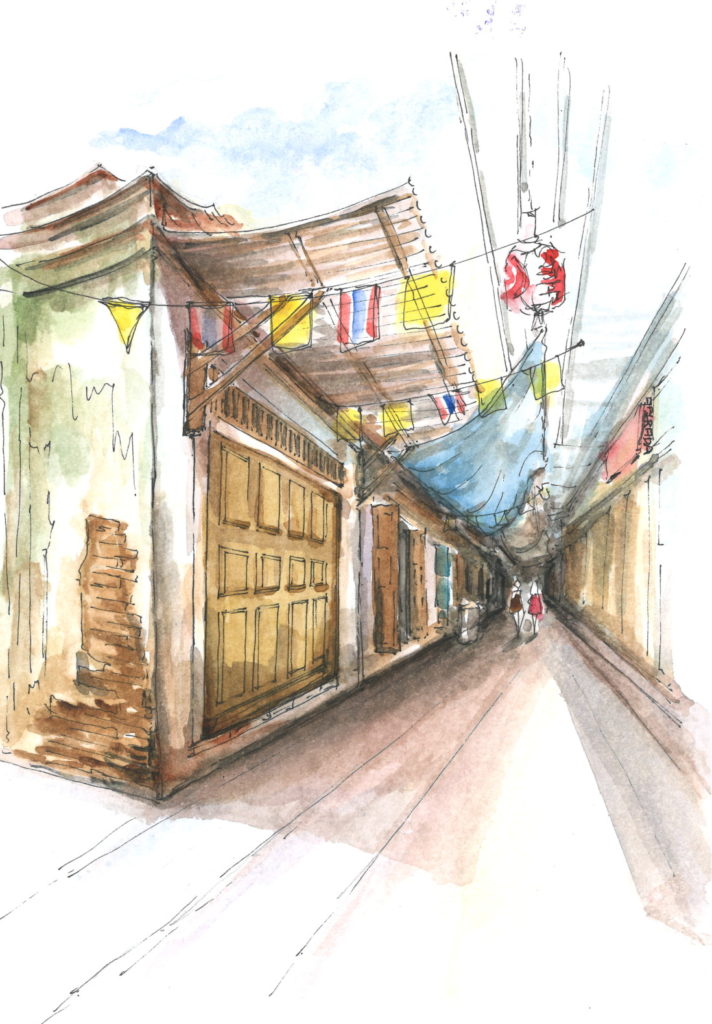




PUN MUANG COMPANY LIMITED
Acting on behalf of Thai Health Promotion Foundation
770 Wanich 2 Road, Talat Noi, Samphanthawong, Bangkok 10100
Email : Punmuangcompany@gmail.com
Contact : Punmuang
Tel/Fax : 02-237-7262 (9.00AM - 6.00PM)
© Copyright 2019 Bangkok Chinatown